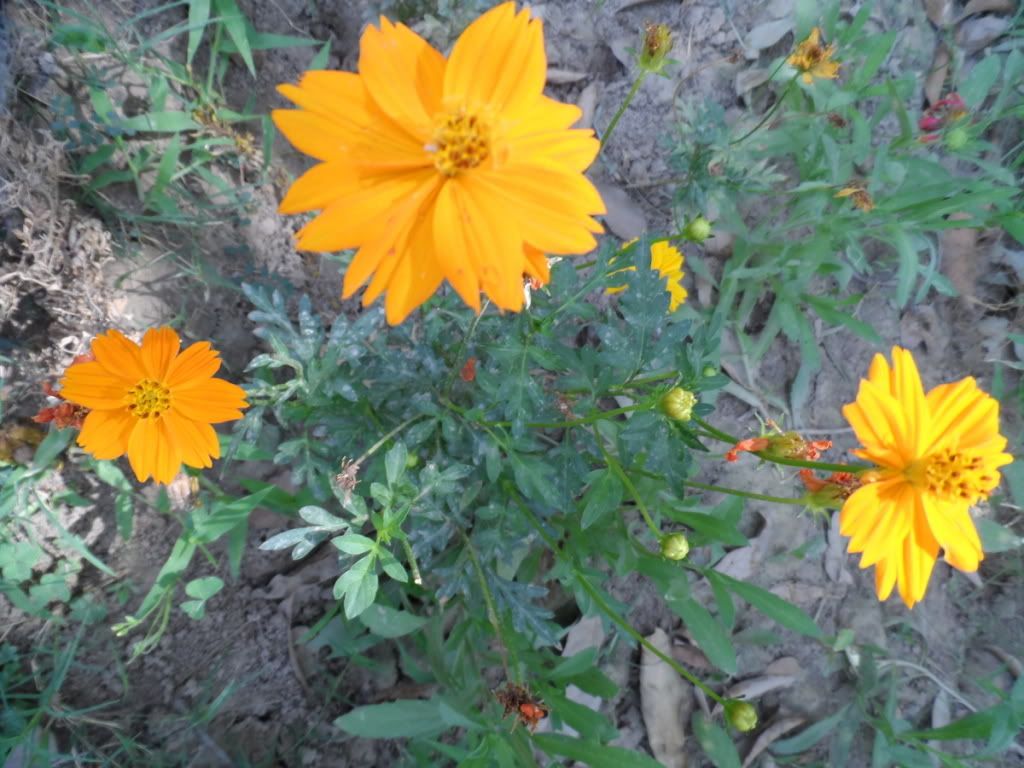
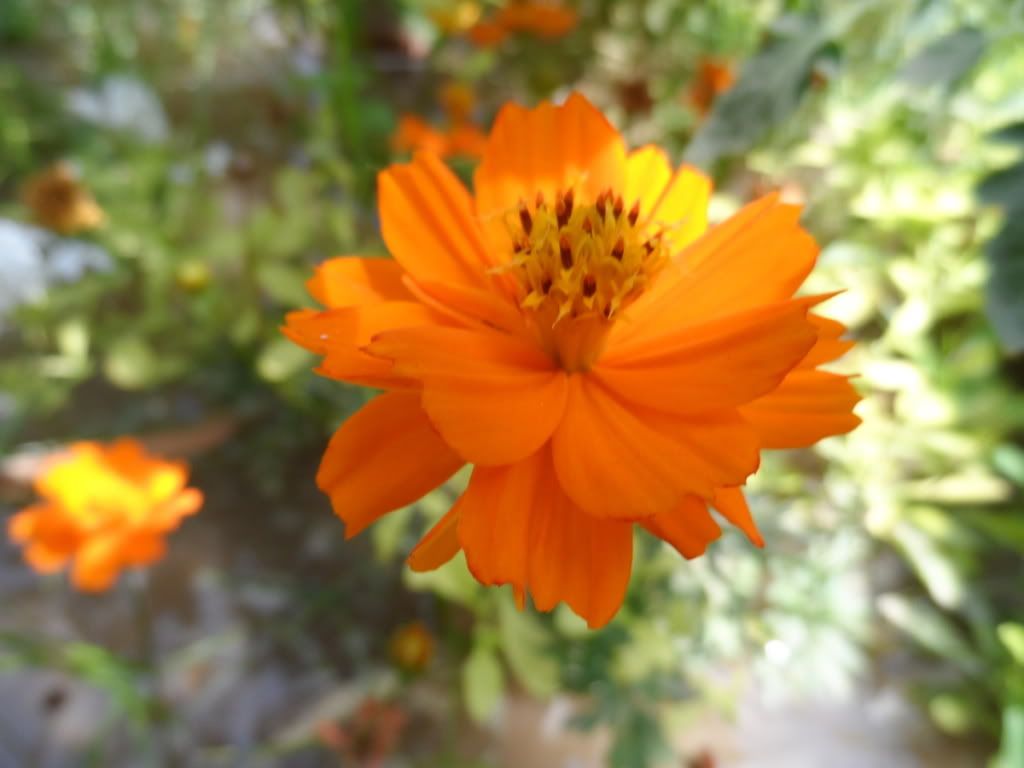
| Botanical Name | Cosmos sulphureus |
| Family | Asteraceae |
| Genus | Cosmos |
| Specie | sulphureus |
| Local Name in Urdu | |
| Common Name | Klondike Cosmos, Sulphur Cosmos, Orange Cosmos |
| Life Cycle | Annuals |
| Cultivar Name | |
| Fragrant or Not | NO |
| Category(Bush/Vine/Tree) | Ornamental flowering plant |
| Height | 12-36 in. |
| Spacing | 9-12 in |
| Flowering Months | summer |
| Flower Color | Red Orange Bright Yellow |
| Growing Areas | hot areas of Pakistan |
| Frost Tender | no |
| Exposure | full sun |
| Soil pH | tolerent |
| Propagation | by seeds |
| Uses | ornamental plant |
| Other Details | Native to Mexico, this cosmos is an upright, hairy-stemmed, warm-weather annual that typically grows to 1-3’ tall, but can grow to as much as 6’ tall. It produces daisy-like flowers (to 2.5” diameter) with yellow discs and yellow rays. Leaves (to 12” long) are 2-3 pinnate with lanceolate leaflets. Popular cultivars of this species are in many cases compact to dwarf plants with semi-double to double flowers and with flower colors ranging from orange to yellow to scarlet red. Genus name comes from the Greek word kosmos which means decoration or ornament. Additional common names for this plant include yellow cosmos and orange cosmos.It is especially popular in Korea and Japan, where it is often seen in mass plantings along roadsides.Flowering is best in full sun, although partial shade is tolerated. The plant is tolerant to drought after germination, and is seldom subject to insect or disease damage.Avoid rich fertile soils because plants may grow too tall and flop over.Deadhead spend flowers to prolong bloom. Taller plants may be cut back. Plants will sometimes self-seed, particularly if seed drops on bare ground. Self-seeding may rise to the level of being aggressive in some climates and conditions. Seed may be harvested in fall for planting the following spring. |